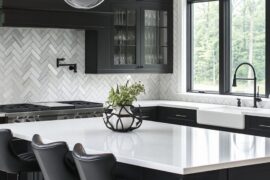
Japandi design transforms kitchens into calm, purposeful spaces where every element earns its place. This fusion of Japanese minimalism and Scandinavian warmth creates interiors that feel both grounded and beautifully restrained.
Japandi style draws from two design philosophies that share a deep respect for simplicity and natural materials. Japanese wabi-sabi embraces imperfection and quiet beauty, while Scandinavian hygge celebrates warmth and everyday comfort.
The kitchen is one of the most rewarding rooms to apply Japandi principles. Clean lines, handleless cabinetry, raw textures, and a muted color palette all work together to reduce visual noise.
1. Natural Wood Open Shelving

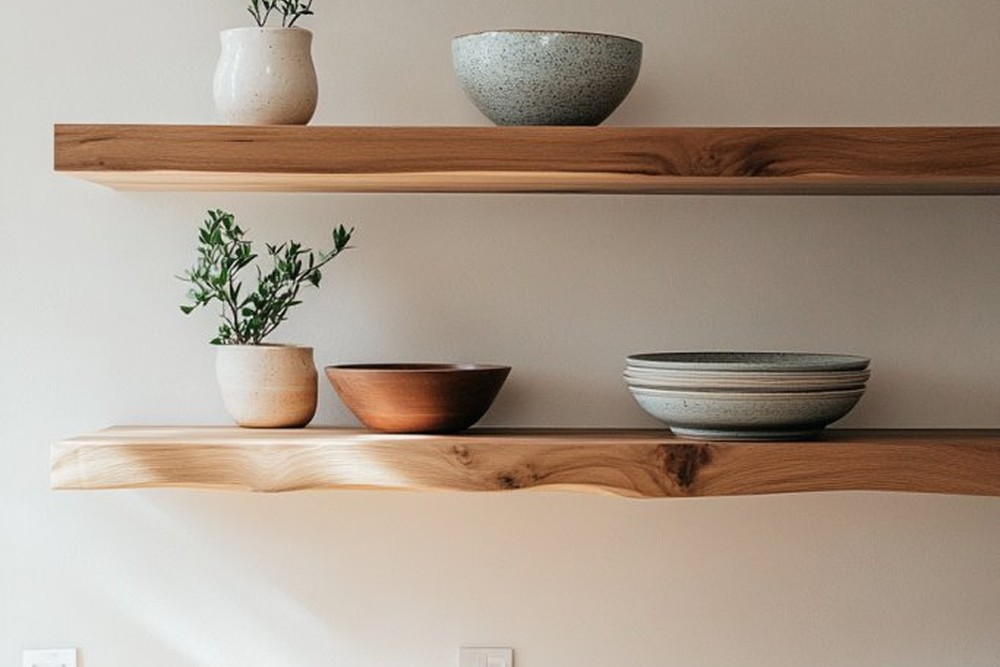
Floating shelves in pale ash or warm oak sit against soft neutral walls, holding neatly stacked ceramic dishware and simple bowls in perfect alignment. The natural wood grain adds organic warmth while matte black brackets introduce a quiet modern contrast that anchors the whole display.
Mount shelves at eye level and use wall anchors for stability, keeping the arrangement intentionally sparse. Limit decorative items to a few sculptural ceramics or a small woven basket, letting negative space do most of the visual work.
2. Warm Monochrome Earth Palette
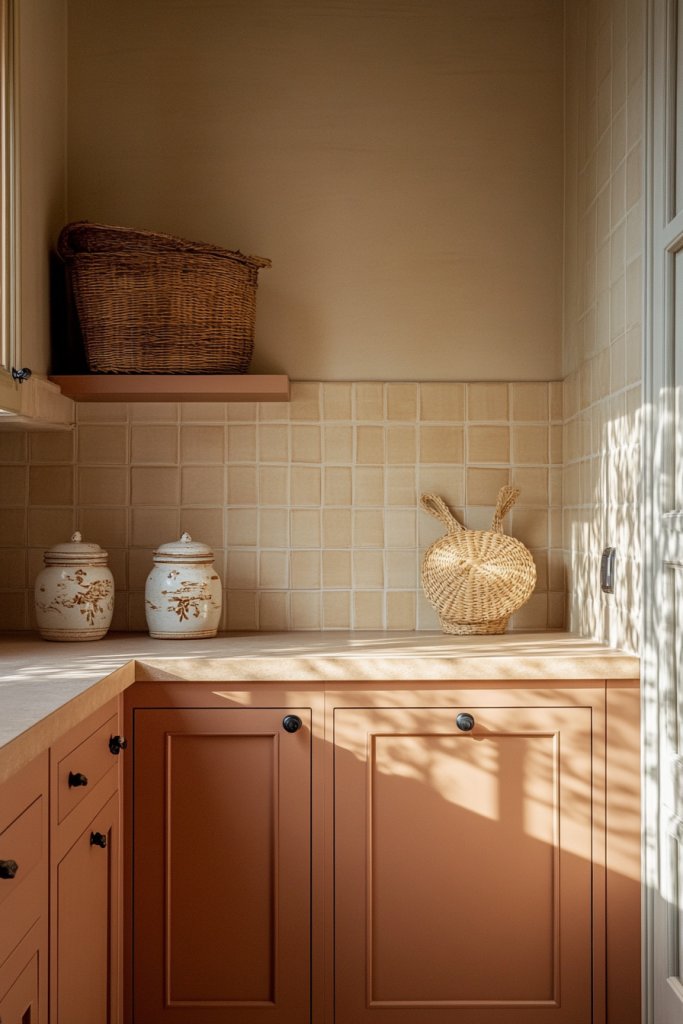
A Japandi kitchen leans on warm whites, soft taupes, and earthy terracottas layered together to build a cohesive, calming atmosphere. These tones reflect natural light beautifully and make the kitchen feel larger without relying on stark, cold whites.
Choose one dominant neutral for cabinetry and pull in one or two warmer accent tones through textiles, ceramics, or countertop materials. Avoid introducing more than three tones in the same space to preserve the signature monochrome calm.
3. Matte Black Contrast Hardware
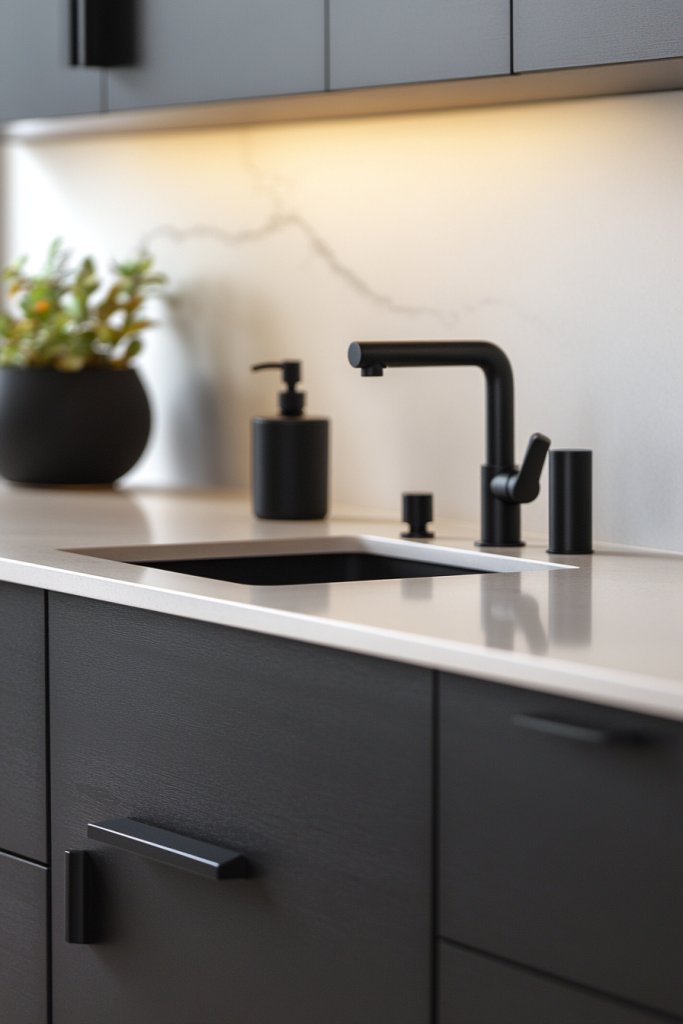
Matte black fixtures and hardware cut through soft neutral surfaces with quiet authority, adding definition to handleless cabinetry and clean countertops. Tap fittings, drawer pulls, and light pendants all work together when finished in the same matte black tone.
Swap out existing chrome or brushed nickel hardware for matte black alternatives to instantly sharpen the Japandi aesthetic. Keep all metal finishes consistent across the kitchen so the contrast reads as intentional rather than mismatched.
4. Floating Island Minimalist Design

A floating kitchen island with clean edges and no decorative detailing becomes the calm focal point of a Japandi kitchen. A solid wood top paired with a matte base in white or charcoal keeps the design grounded and visually uncluttered.
Choose an island size proportional to the room, leaving at least 90 centimetres of clearance on all sides for comfortable movement. Avoid overhead pendant overkill and limit yourself to one or two simple pendants hung at a consistent height above the surface.
5. Panel-Integrated Hidden Appliances

Appliances hidden behind cabinetry panels create an uninterrupted surface that defines the Japandi kitchen aesthetic more than almost any other single design choice. Refrigerators, dishwashers, and ovens disappear behind matching cabinet fronts, leaving only clean lines in view.
Work with a cabinetmaker to specify panel-ready appliance models before finalising your cabinetry order, as sizing must align precisely. Push-to-open mechanisms replace visible handles entirely, reinforcing the seamless, clutter-free surface from every angle.
6. Textured Ceramic Concrete Countertops
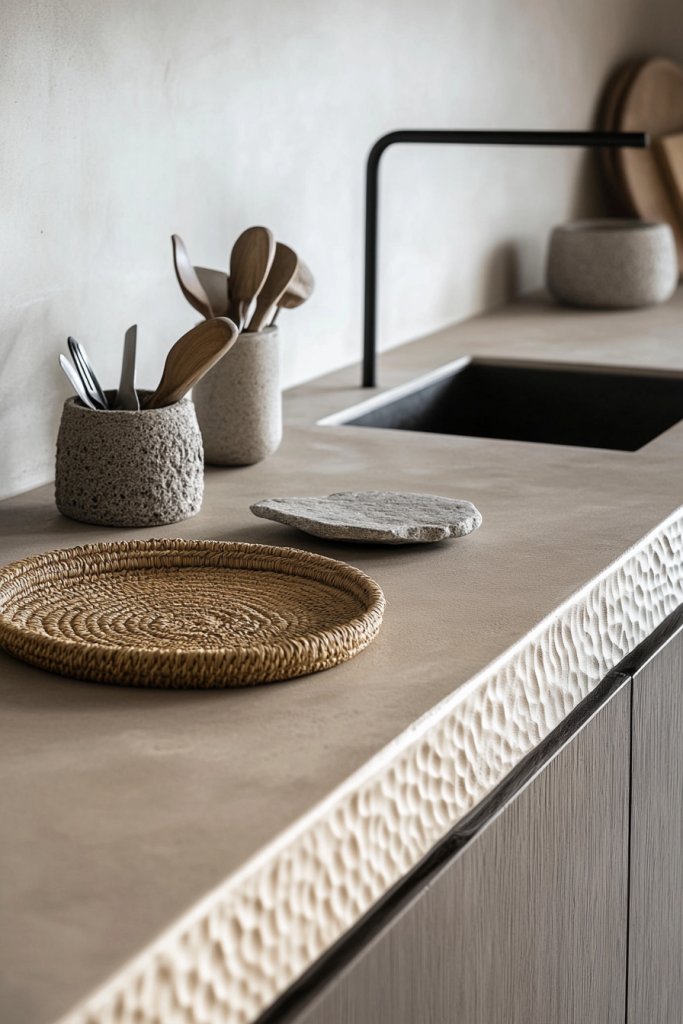
Matte ceramic and raw concrete countertops introduce subtle surface texture that adds depth to an otherwise minimal Japandi kitchen. These materials carry natural variation in tone and finish, giving the space an organic quality that polished stone cannot replicate.
Seal concrete countertops with a food-safe penetrating sealer to protect against staining without adding unwanted sheen. For ceramic surfaces, choose large-format tiles with tight grout lines to maintain a smooth, unbroken visual flow across the counter.
7. Skylights and Large Windows

Natural light is a foundational Japandi design element, and large windows or skylights flood the kitchen with soft, diffused illumination throughout the day. Light bouncing off natural wood and matte surfaces creates a warm, layered glow that artificial lighting alone cannot achieve.
Keep window treatments minimal or eliminate them entirely in kitchen spaces where privacy allows, letting the full volume of natural light enter freely. If adding a skylight, position it above the main prep zone to direct the most light exactly where activity concentrates.
8. Recessed Functional Kitchen Lighting
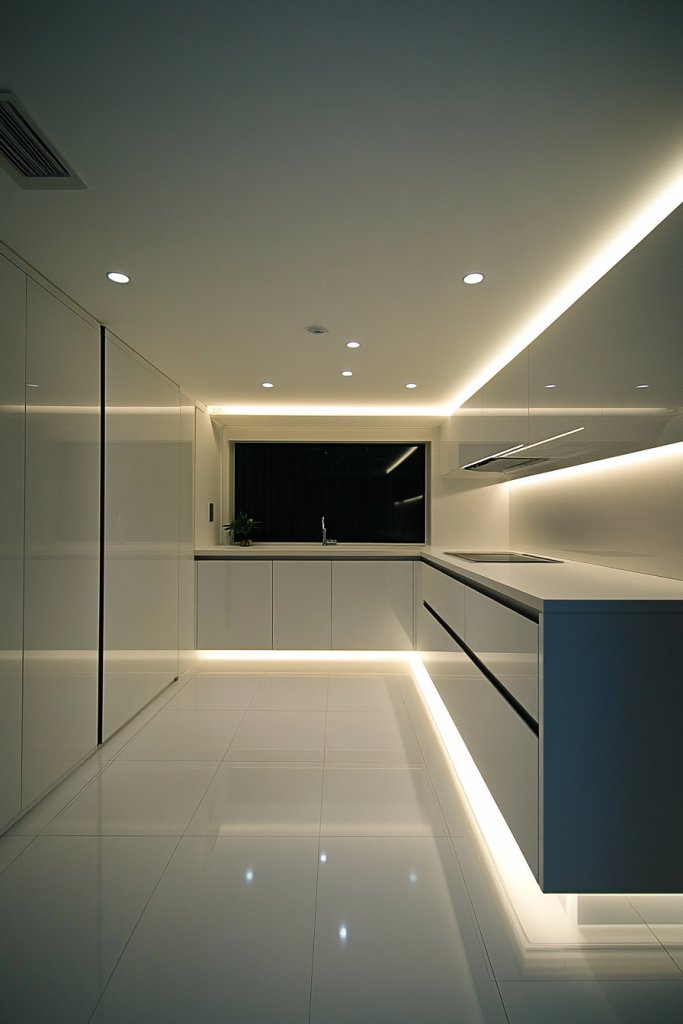
Simple recessed ceiling fixtures provide even, shadow-free task lighting that supports the Japandi commitment to functional beauty without decorative excess. A single row of recessed downlights over the countertop keeps the ceiling visually clean and uninterrupted.
Use warm white bulbs rated between 2700K and 3000K to complement the earthy tones and natural wood surfaces throughout the kitchen. Pair recessed lighting with dimmer switches so you can shift the atmosphere from bright and practical to soft and relaxed with ease.
9. Open-Frame Minimalist Storage Racks

Open-frame metal or wood storage racks bring order to a Japandi kitchen without the visual weight of closed cabinetry, keeping frequently used items accessible and on display. Slim black steel frames hold timber shelving boards in a combination that feels considered and intentional.
Reserve open-frame racks for items you genuinely find beautiful, such as hand-thrown pottery, cast iron pans, or glass jars, rather than using them as general overflow storage. Edit the arrangement regularly to prevent the display from slipping into clutter.
10. Handleless Neutral-Toned Cabinetry
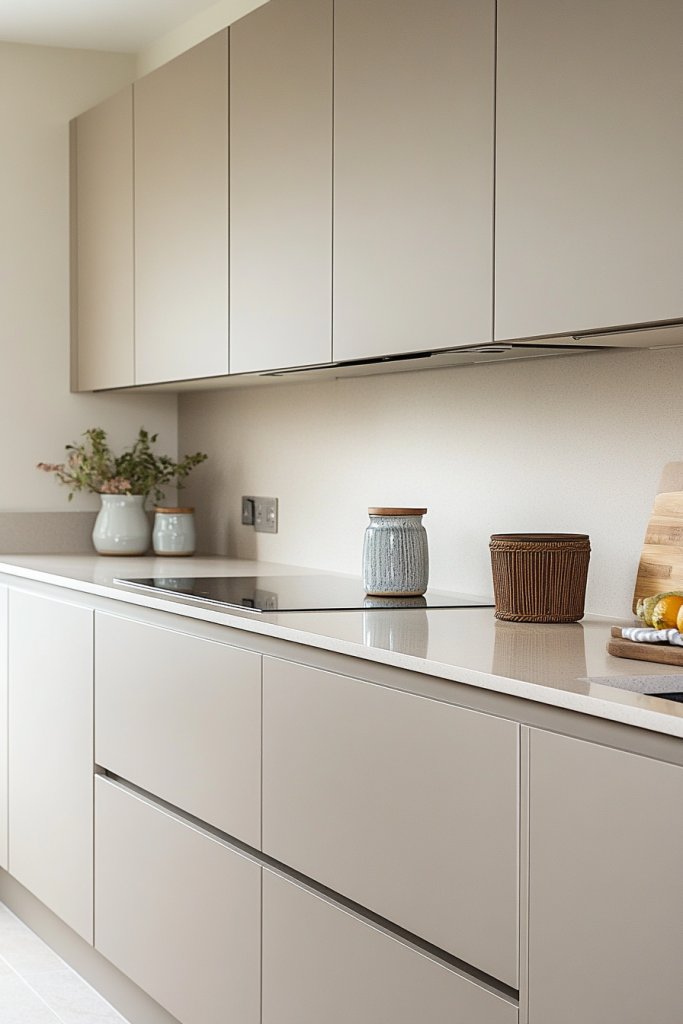
Handleless cabinetry in warm white, soft greige, or pale clay forms the quiet backbone of a Japandi kitchen, creating smooth uninterrupted surfaces from floor to ceiling. Push-to-open mechanisms and routed finger-pull channels maintain the clean facade without any visible hardware.
Choose a flat-front cabinet door profile rather than shaker or raised-panel styles, as the completely smooth surface best captures the Japandi aesthetic. Apply a matte lacquer finish rather than gloss to absorb light softly and prevent the surfaces from feeling overly clinical.
11. Natural Fiber Basket Organization

Natural fiber baskets woven from seagrass, rattan, or jute introduce warmth and organic texture to Japandi kitchen storage without adding visual noise. These baskets sit beautifully on open shelves or inside deep drawers, corralling loose items behind their natural woven surfaces.
Choose baskets in a consistent weave style and similar tonal range so the collection reads as cohesive rather than collected randomly over time. Label the interior of each basket with a simple tag to keep contents organised and the exterior surface clean and unmarked.
12. Multi-Functional Compact Kitchen Tools

A Japandi kitchen keeps only the tools that earn their counter space through genuine daily use, favouring compact multi-functional pieces over single-purpose gadgets. A quality chef’s knife, a simple wooden cutting board, and one well-made ceramic bowl represent this philosophy perfectly.
Store tools you use daily in a slim knife block or a ceramic utensil holder positioned close to the main prep area for immediate access. Relocate seasonal or rarely used items to deep drawer storage so the visible surfaces remain intentionally minimal and calm.
13. Light Wood Textural Wall Paneling

Vertical or horizontal timber wall paneling in pale oak or whitewashed wood introduces quiet surface texture to a Japandi kitchen without competing with other design elements. The paneling acts as a warm backdrop that makes cabinetry and open shelving appear to float against a soft, natural surface.
Apply paneling to a single feature wall behind open shelving or along a breakfast bar rather than wrapping all four walls, which would overwhelm the space. Finish the timber with a matte water-based sealer to protect it from kitchen moisture while preserving the natural wood tone.
14. Modular Minimalist Drawer Dividers

Modular drawer dividers in pale timber or matte white organise utensils, cutlery, and tools into clean, clearly defined sections that reflect the Japandi commitment to purposeful order. Opening a well-divided drawer feels as considered and calm as the visible surfaces surrounding it.
Measure drawer interiors carefully and choose adjustable divider systems that allow you to reconfigure compartments as your kitchen storage needs evolve. Opt for natural bamboo or unfinished timber dividers over plastic alternatives to maintain the organic material palette throughout.
15. Neutral Tones Backsplash Design
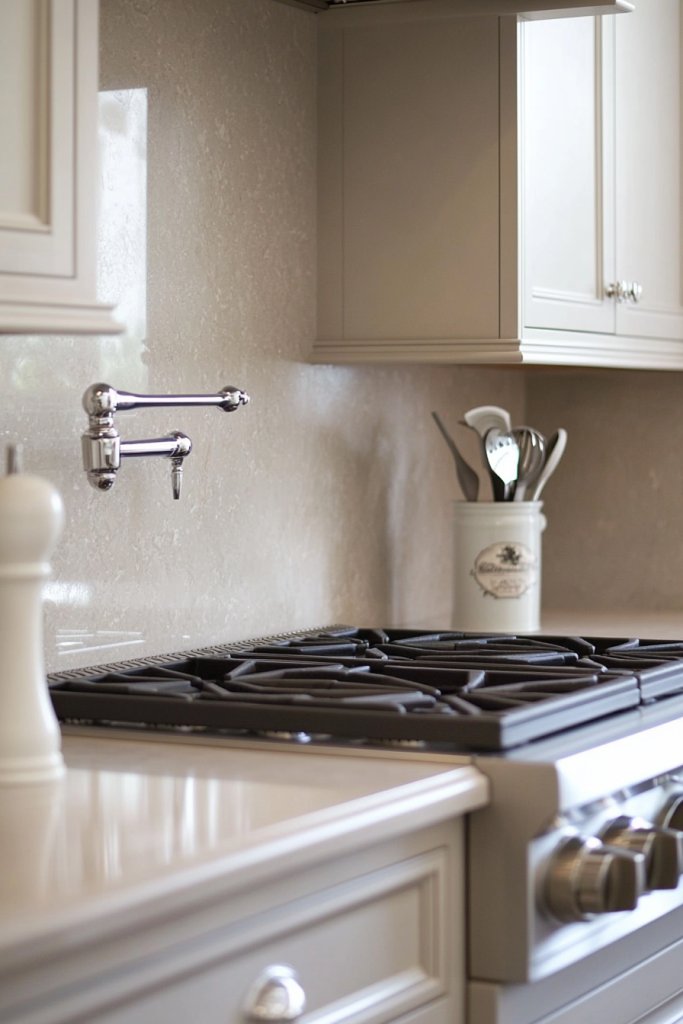
A Japandi backsplash relies on large-format tiles in soft stone, warm cream, or pale sage to create a restrained surface that supports rather than competes with surrounding cabinetry. Subtle surface variation within a single tile tone adds depth without disrupting the kitchen’s quiet visual rhythm.
Choose a running bond or stacked vertical tile layout rather than complex patterns, as the simplicity of the format reinforces the Japandi aesthetic directly. Match grout colour as closely as possible to the tile tone so the joins recede and the surface reads as one cohesive plane.
16. Glass Jars Dry Goods Display

Clear glass storage jars arranged on open shelves or countertops turn everyday pantry staples into a calm, curated display that perfectly suits a Japandi kitchen. Grains, pulses, seeds, and teas visible through uniform glass containers create a quietly beautiful rhythm along the shelf.
Choose jars with matching lids in timber, matte black, or cork to maintain a consistent aesthetic across the full collection. Decant pantry items as soon as you buy them so the display stays tidy and the kitchen retains its signature sense of intentional, unhurried order.
Start with one or two of these ideas and let the changes build naturally toward a cohesive Japandi kitchen. Every deliberate choice you make brings the space closer to the calm, functional interior it deserves to be.