
An organic modern kitchen brings together natural warmth and clean design in one beautifully functional space. Wood, stone, earthy tones, and thoughtful layouts work together to create a kitchen that feels both grounded and effortlessly stylish.
The organic modern style draws from nature without sacrificing the clean lines that define contemporary interiors. It combines raw, tactile materials with a restrained color palette to create spaces that feel calm and intentional.
Kitchens styled this way prioritize honest materials like timber, stone, and linen over synthetic finishes. Every element earns its place by contributing both beauty and function to the room.
1. Warm Wood Finishes

Natural wood finishes bring immediate warmth and texture to any kitchen, making the space feel grounded and alive. Oak cabinetry, reclaimed timber shelving, and live-edge countertops each carry their own grain patterns that no manufactured surface can replicate.
Choose a consistent wood tone across cabinets and open shelves to create visual flow throughout the kitchen. Pairing matte wood finishes with simple hardware lets the natural grain remain the focal point of the entire room.
2. Earthy Kitchen Color Palettes

Warm taupes, muted terracottas, and soft sage greens form the foundation of an earthy kitchen palette that feels deeply calming. These tones mirror the natural world and work in harmony with wood and stone surfaces already present in the space.
Layer sage green cabinetry with sandy beige walls to keep the palette balanced and light-filled. Adding natural linen textiles through chair cushions or window treatments reinforces the organic warmth of every chosen shade.
3. Minimalist Cabinet Design
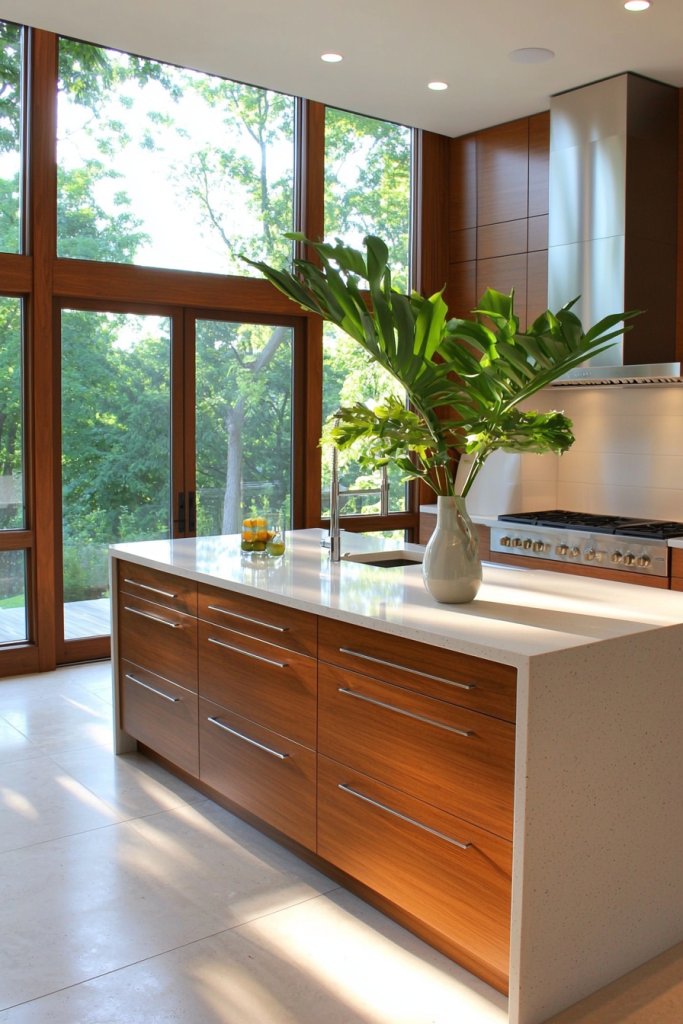
Streamlined cabinetry with flat-panel doors creates a clean, uncluttered backdrop that lets other natural materials take center stage. The smooth surfaces reflect light evenly, making even a smaller kitchen feel open and considered.
Choose handleless cabinets or simple recessed pulls to maintain the minimalist aesthetic without visual interruption. Keeping cabinet colors in one soft, neutral tone across the entire kitchen strengthens the sense of calm and cohesion throughout the room.
4. Open Shelving Airy Style

Open shelving removes visual barriers and gives a kitchen an immediately lighter, more breathable quality that closed cabinets rarely achieve. Timber shelves styled with ceramics and glassware add personality while keeping the overall look warm and organic.
Limit shelf displays to grouped items in natural materials like wood, clay, and woven baskets to avoid visual clutter. Spacing items generously across each shelf allows the eye to rest and enhances the airy feeling the open shelving creates.
5. Stone Texture Kitchen Elements

Stone elements introduce raw, beautiful texture that gives an organic modern kitchen its most distinctive visual character. A honed marble countertop, rough-edged slate feature wall, or travertine backsplash each add depth and a sense of geological history to the space.
Pair stone surfaces with warm wood tones to prevent the kitchen from feeling cold or overly industrial in its aesthetic. Choosing stone with visible veining or natural variation ensures each surface remains unique and visually compelling throughout daily use.
6. Biophilic Design: Nature-Inspired Kitchen Connection
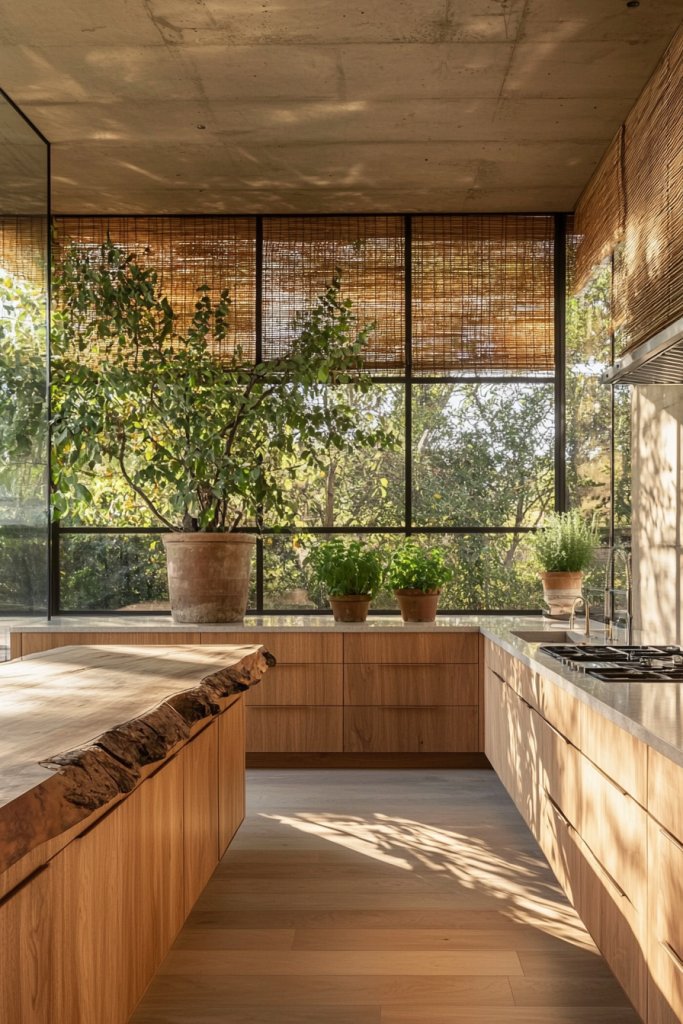
Biophilic design in the kitchen creates a direct sensory link between the interior space and the natural world outside. Large potted plants, herb gardens on windowsills, and natural fiber accessories all reinforce this connection in practical and beautiful ways.
Position plants near natural light sources to keep them thriving and to enhance the organic atmosphere of the kitchen. Grouping plants of different heights on a single counter or shelf creates a lush, layered effect that brings genuine life into the room.
7. Eco-Friendly Sustainable Materials

Sustainable materials like reclaimed wood, recycled glass, and FSC-certified timber bring environmental responsibility directly into kitchen design. Choosing these materials means the kitchen looks beautiful while actively reducing its impact on natural resources.
Select bamboo cabinetry or recycled glass countertops as eco-conscious alternatives to conventional kitchen surface materials. Sourcing locally produced stone and timber also reduces the carbon footprint of a renovation while supporting regional craftspeople and sustainable industries.
8. Warm Ambient Kitchen Lighting

Warm lighting transforms an organic modern kitchen from a functional room into a genuinely inviting space at any hour of the day. Pendant lights in rattan or aged brass cast a golden glow that enhances the natural tones of wood and stone surfaces.
Layer lighting across three levels by combining under-cabinet strips, pendant fixtures, and recessed ceiling lights for full flexibility. Choosing bulbs with a warm color temperature below 3000K ensures the light complements earthy palettes rather than washing them out completely.
9. Organic-Shaped Kitchen Islands

Kitchen islands with curved or gently irregular shapes bring a distinctly organic quality to an otherwise structured modern interior. These forms soften the geometry of the room and create a more welcoming central feature that draws people naturally into the space.
Choose a waterfall timber countertop on the island to reinforce the organic modern aesthetic with one continuous natural surface. Adding seating along a curved edge encourages casual gathering and makes the island a natural social anchor for the entire kitchen.
10. Natural Material Backsplash Ideas
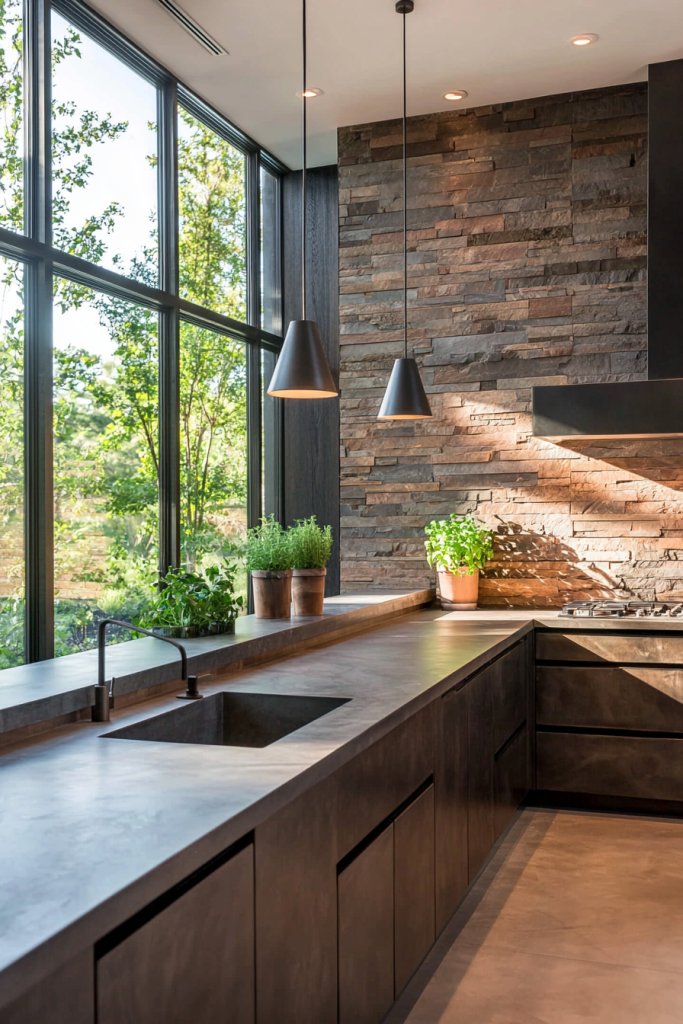
A backsplash made from natural materials like handmade ceramic tiles, raw stone, or terracotta adds immediate texture and artisanal character to any kitchen. These surfaces catch light beautifully and give the wall a depth that standard subway tiles rarely achieve.
Install zellige tiles in warm cream or sage tones to introduce subtle variation and handcrafted texture behind the stove. Keeping the surrounding surfaces calm and neutral allows the backsplash to function as the kitchen’s primary decorative statement without overwhelming the space.
11. Mixing Textures Stylishly
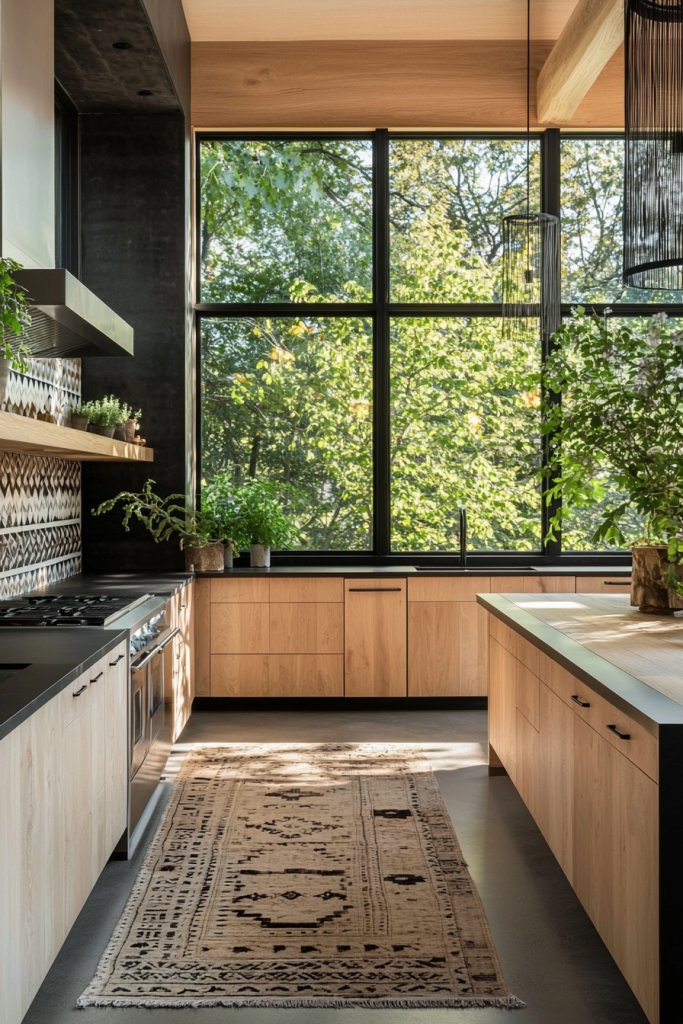
Combining textures in an organic modern kitchen creates a layered, visually rich environment that feels curated rather than flat or monotonous. Rough stone alongside smooth timber, woven textiles beside matte ceramics, all these contrasts make the space feel deeply considered and alive.
Limit the overall color palette to two or three tones so that multiple textures can coexist without creating a chaotic visual result. Repeating one material in different areas of the kitchen, such as wood on both the floor and island, ties the layered scheme together effectively.
12. Kitchen Plants for Freshness

Live plants bring genuine freshness, color, and biological energy into a kitchen in a way that no decorative object can replicate. Trailing pothos, compact olive trees, or bunches of fresh herbs all add organic life to countertops, shelves, and windowsills beautifully.
Choose low-maintenance varieties like snake plants or pothos if the kitchen receives limited natural light throughout the day. Grouping three plants of varying heights together on an open shelf creates an effortless botanical display that strengthens the room’s organic character significantly.
13. Simple Minimalist Hardware
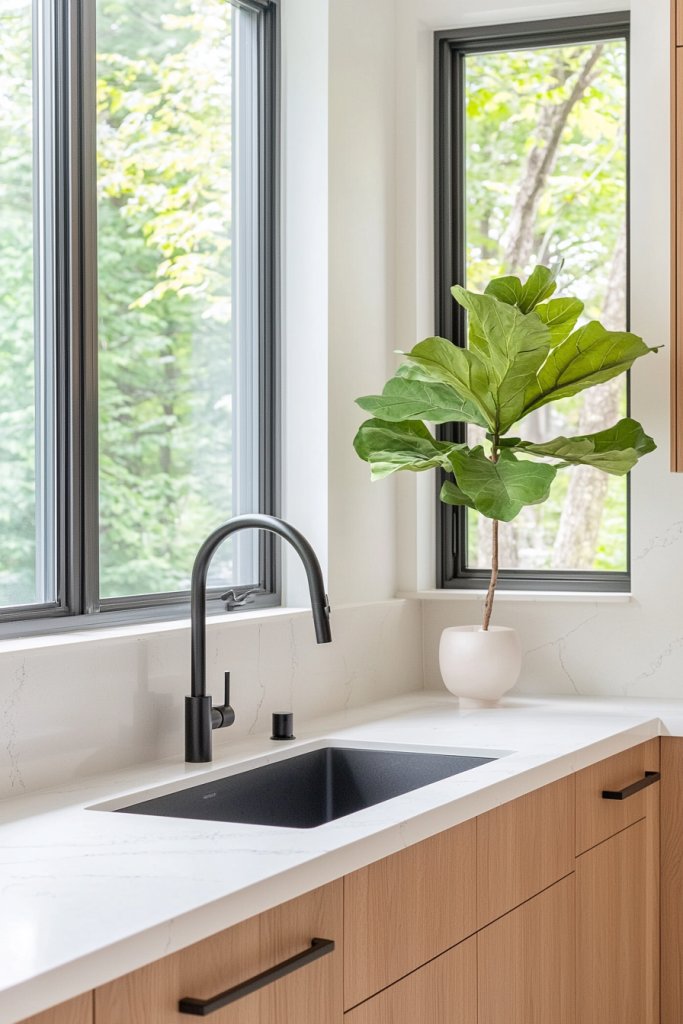
Simple hardware in brushed brass, matte black, or aged bronze adds quiet refinement to cabinetry without competing with natural materials. The right handle or knob acts as jewelry for a cabinet door, small in scale but meaningful in its contribution to the overall aesthetic.
Choose hardware with a slightly imperfect or hand-forged finish to align with the organic quality of the kitchen’s natural materials. Keeping all hardware consistent in finish across every cabinet and drawer creates visual unity that makes the entire kitchen feel purposefully designed.
14. Large Windows Natural Light

Large windows flood an organic modern kitchen with natural light that animates wood grain, stone veining, and earthy color palettes throughout the day. The view they frame, whether a garden, courtyard, or street, also becomes a living element of the kitchen’s overall aesthetic.
Install floor-to-ceiling windows along one wall to maximize daylight and create a seamless visual connection with the outdoor environment. Using minimal window dressing like sheer linen panels maintains privacy while still allowing soft, diffused natural light to fill the entire room.
15. Vintage Accents Timeless Kitchen
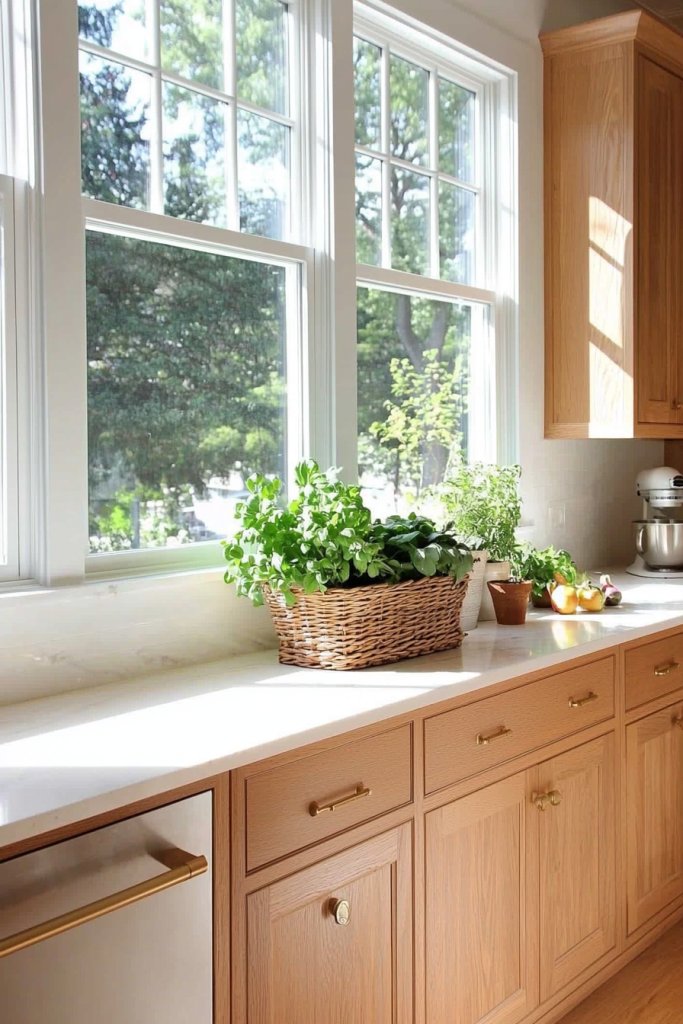
Carefully chosen vintage accents give an organic modern kitchen a sense of history and character that newly purchased pieces rarely provide on their own. An antique wooden stool, a collection of aged ceramic vessels, or a salvaged timber shelf all add warmth and personal story to the space.
Source one or two standout vintage pieces rather than overcrowding the kitchen with antique items that compete visually with each other. Placing a single vintage accent against a clean, neutral backdrop allows it to read as intentional and curated rather than cluttered or eclectic.
16. Cozy Kitchen Nook Design
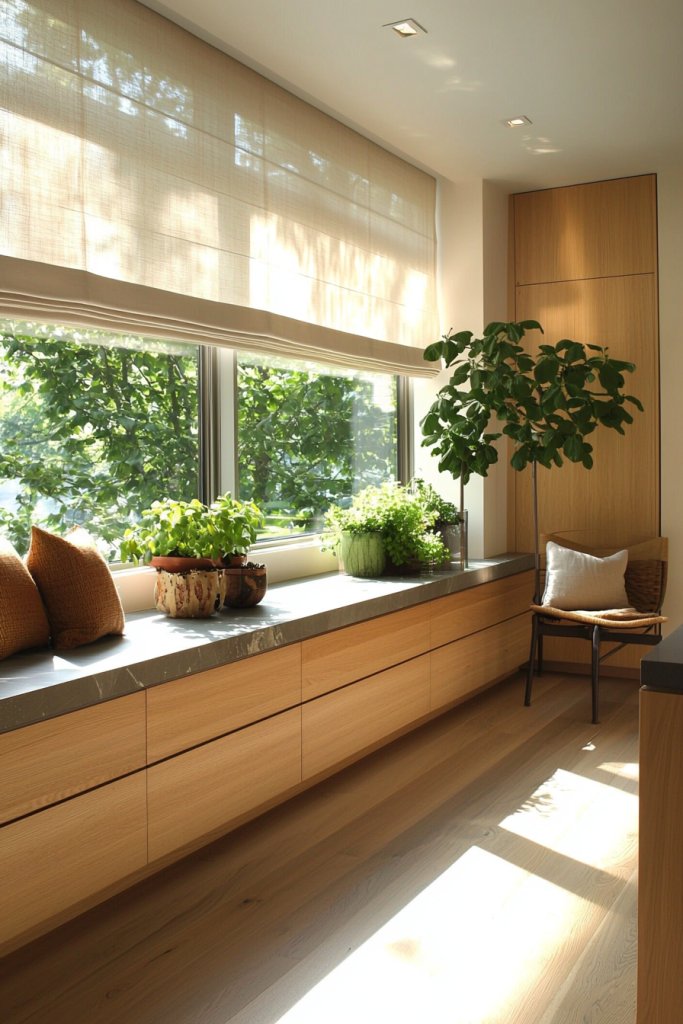
A cozy nook within a kitchen creates a defined spot for relaxed dining, quiet morning coffee, or casual conversation separate from the main cooking area. Bench seating upholstered in natural linen, a small timber table, and a pendant light overhead give the nook its own intimate atmosphere.
Build the nook into an alcove or corner to physically define the space and make it feel genuinely sheltered and enclosed. Adding a small indoor plant and a woven cushion to the bench reinforces the organic warmth that defines the broader kitchen aesthetic throughout.
17. Geometric Modern Kitchen Patterns
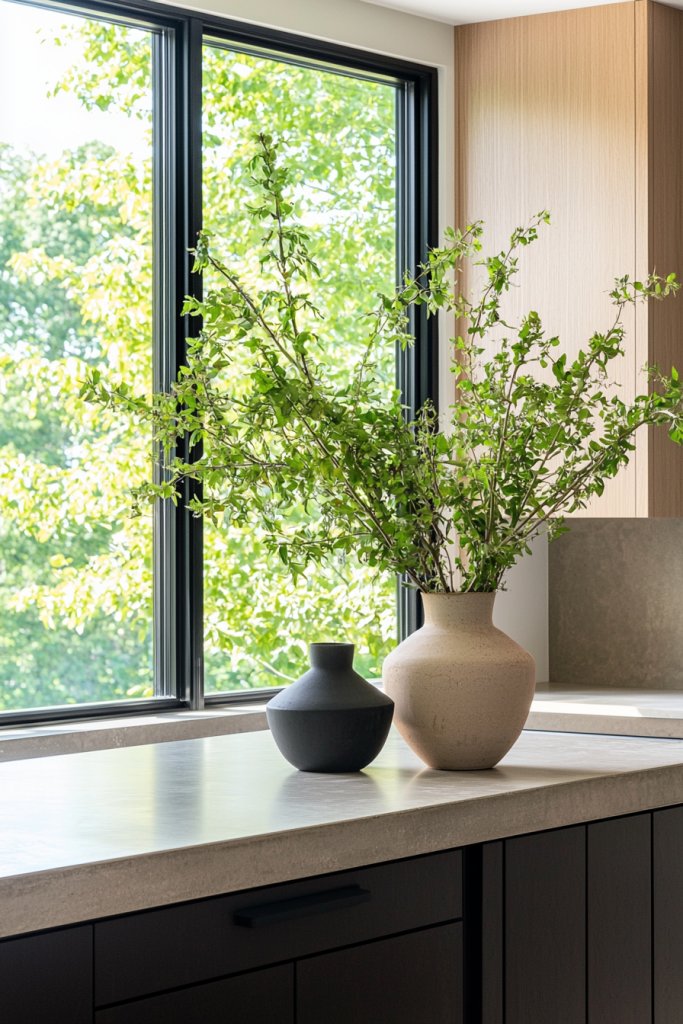
Geometric patterns bring a contemporary edge to an organic modern kitchen while maintaining visual order and design clarity in the space. Hexagonal floor tiles, diamond-patterned textiles, or grid-format cabinetry inserts introduce graphic interest without overwhelming the room’s natural warmth.
Choose geometric patterns in natural materials like stone mosaic or handmade cement tile to keep them aligned with the organic aesthetic. Using geometry selectively on one surface, such as the floor or a single feature wall, prevents the pattern from dominating the entire room.
18. Quality Kitchen Craftsmanship Details

High-quality craftsmanship shows in the quiet details of an organic modern kitchen, from the precise fit of a drawer to the smooth edge of a stone countertop. These refined details communicate care and permanence, making the kitchen feel genuinely well-made rather than assembled quickly.
Invest in skilled joinery for cabinetry and choose stone that a craftsperson cuts and finishes by hand rather than by machine. The difference in quality between handcrafted and mass-produced details becomes immediately visible to anyone who touches or uses these surfaces daily.
19. Easy-Maintenance Kitchen Surfaces

Versatile surfaces in an organic modern kitchen balance aesthetic beauty with the practical reality of daily cooking, cleaning, and heavy use. Sealed stone, oiled timber, and vitrified ceramic tiles all deliver natural warmth while resisting stains, moisture, and the wear of a busy household.
Apply a penetrating sealer to natural stone countertops immediately after installation to protect them from oil and water absorption. Choosing slightly textured surfaces over perfectly polished ones also helps conceal minor scratches and daily wear that inevitably accumulate over time in any active kitchen.
20. Handcrafted Kitchen Personal Touches

Handcrafted elements give an organic modern kitchen genuine individuality that mass-produced finishes and standardized fittings simply cannot replicate or manufacture. A hand-thrown ceramic sink, bespoke timber shelving, or custom carved cabinet fronts each reflect the skill and intention of a real maker.
Commission a local ceramicist to create a set of matching bowls or pendant shades that connect directly to the kitchen’s color palette. Displaying handcrafted pieces openly on shelves signals that the kitchen values artistry and craft as equal partners alongside function and efficiency.
21. Efficient Kitchen Layout Flow
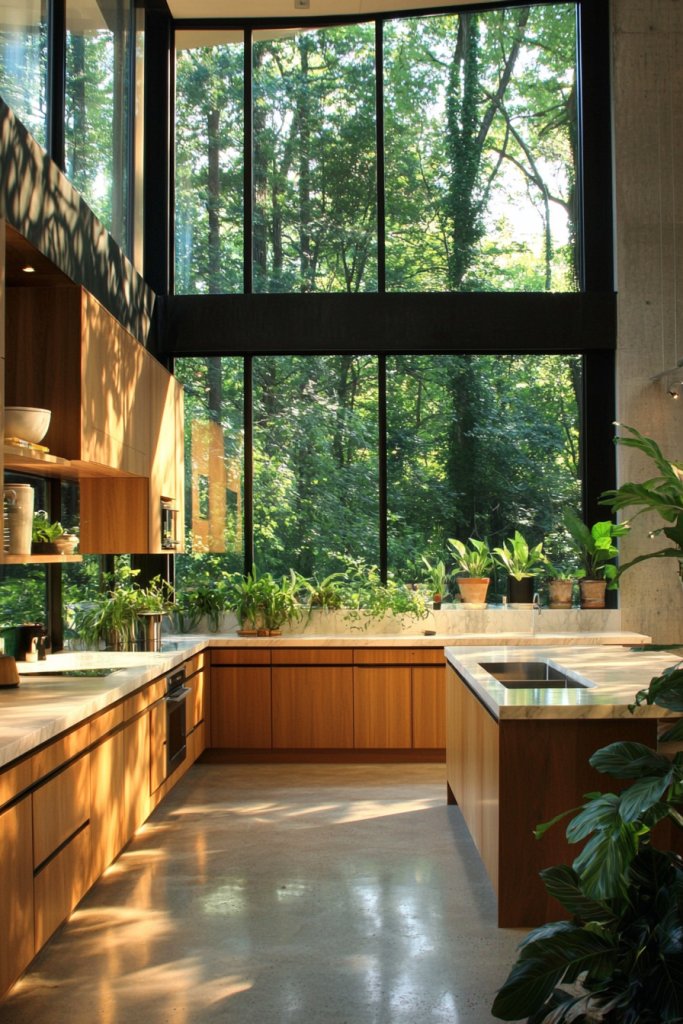
A thoughtful kitchen layout creates efficient movement between the cooking, preparation, and storage zones that every functional kitchen relies on daily. When these zones align logically, the kitchen becomes easier and more enjoyable to use during every meal, large or small.
Apply the classic work triangle principle by positioning the stove, sink, and refrigerator within a compact, easy-to-navigate triangular arrangement. Keeping the walkways between these three points clear of furniture and obstructions significantly improves the practical flow of any kitchen layout.
22. Open Concept Social Kitchen
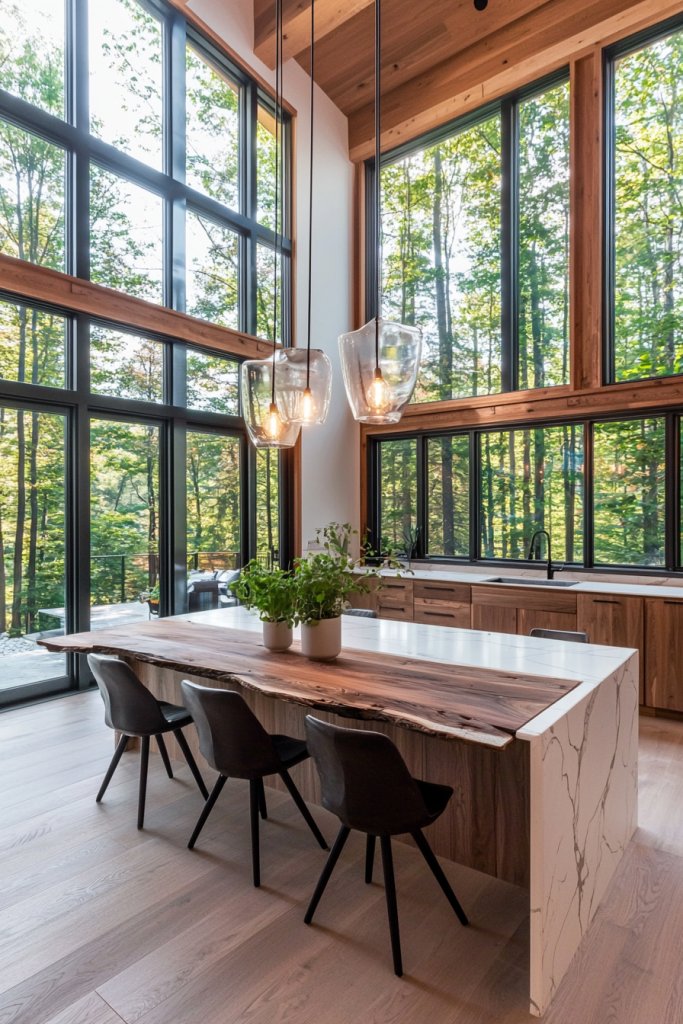
An open concept kitchen removes walls and barriers to create a shared living space where cooking, dining, and conversation all happen together naturally. This layout makes the kitchen the social and visual heart of the home rather than an isolated, purely functional room.
Use consistent flooring across the kitchen and adjoining living areas to visually unify the open space and strengthen the sense of flow. Positioning the kitchen island so it faces the living area allows the cook to remain part of any conversation happening in the broader shared space.
23. Artistic Unique Kitchen Identity

Artistic touches give an organic modern kitchen a distinctive identity that reflects the personality and creative preferences of the people who live there. A statement ceramic sculpture, a hand-painted mural on one wall, or a curated collection of vintage pottery all express individuality with confidence.
Choose one wall in the kitchen to carry a bold artistic statement, keeping surrounding surfaces calm and neutral to give it full impact. Selecting artwork or decorative objects that share a material or color link with the kitchen’s existing palette ensures the artistic additions feel considered rather than random.
24. Seamless Kitchen Technology Integration
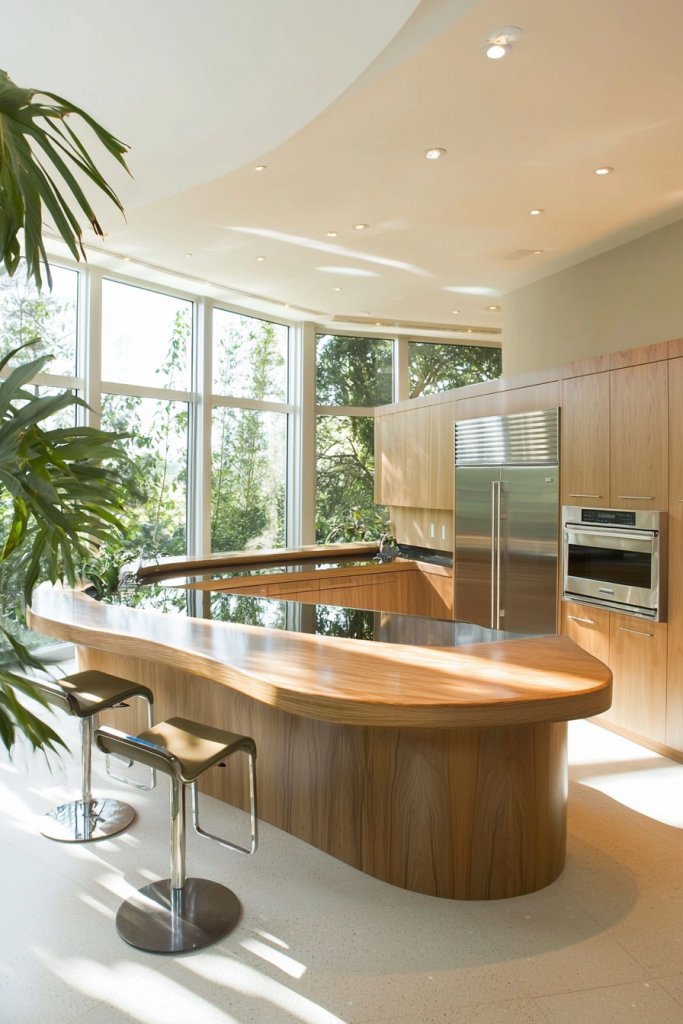
Integrating technology seamlessly into an organic modern kitchen preserves the room’s natural warmth while adding genuine convenience to everyday cooking and living. Induction cooktops that flush perfectly with stone countertops, concealed charging drawers, and touch-operated cabinet systems all disappear into the design beautifully.
Conceal appliances like the refrigerator and dishwasher behind cabinetry panels that match the rest of the kitchen’s door fronts and finish. This approach ensures technology serves the kitchen without visually interrupting the cohesive, nature-inspired aesthetic that defines the organic modern style throughout the entire space.
Choose two or three ideas from this list and begin layering them into your kitchen to start building an organic modern space that genuinely reflects your style. Every natural material and considered detail you add brings the kitchen one step closer to a space that feels both beautiful and completely at home.


