Wabi sabi transforms your bathroom into a sanctuary that celebrates natural beauty, honest materials, and the quiet charm of imperfection. These 25 ideas will help you build a space that feels grounded, calm, and authentically yours.
The wabi sabi philosophy originates from Japanese aesthetics, finding beauty in what is imperfect, incomplete, and impermanent. Bathrooms offer the perfect canvas for this approach, where raw textures, earthy tones, and handcrafted details create genuine warmth.
Unlike polished, trend-driven interiors, a wabi sabi bathroom prioritizes soul over shine. Natural materials, aged finishes, and organic shapes work together to produce a space that feels deeply restful and human.
1. Natural Materials Ground Bathrooms

Reclaimed wood frames mirrors with warmth and character, while stone tiles underfoot connect the room to the natural world. Bamboo shelving, jute rugs, and clay accessories layer texture into every corner of the space.
Choose a freestanding stone basin as your focal point to anchor the entire room in organic elegance. Add terracotta planters and wooden accents to build a cohesive, nature-inspired bathroom that feels genuinely warm.
2. Earthy Color Palettes Create Calm

Warm browns, soft greens, and muted terracottas reflect the natural world and fill a bathroom with quiet, grounded calm. A gentle clay wall color or natural stone tile with visible imperfections sets the perfect wabi sabi tone.
Balance deeper earthy tones with soft cream or warm white accents so every color has room to breathe. Introduce wooden surfaces in rich brown tones to deepen the organic palette and enhance the room’s natural warmth.
3. Handmade Ceramics Add Character

Handmade ceramics bring unique glazes, irregular textures, and one-of-a-kind shapes into your bathroom that mass-produced items simply cannot replicate. A handcrafted soap dish or rustic toothbrush holder introduces authentic warmth and artisanal charm instantly.
Select pieces in earthy tones and organic forms, and allow a mismatched collection to build effortless, layered character. Use ceramic bowls for toiletries and ceramic planters for small greenery to add both function and beauty together.
4. Textured Walls Add Visual Depth

A stucco finish or tactile wallpaper transforms a flat bathroom wall into a surface full of natural, organic depth. The irregular surface catches light differently throughout the day, giving the room a living, breathing quality.
Apply a limewash paint technique over existing plaster to achieve a beautifully uneven, aged wall finish on a budget. Layer in woven textiles and raw wood nearby so the textured wall feels like part of a complete, cohesive design.
5. Vintage Fixtures Add Warmth

A clawfoot tub or aged brass faucet carries decades of history into your bathroom, creating instant warmth and character. Vintage fixtures introduce an honest imperfection that new fittings simply cannot manufacture or imitate convincingly.
Source antique hardware from salvage yards and pair it with simple, neutral surroundings to let each piece stand out. A vintage mirror with a worn frame above the vanity completes the look and reinforces the wabi sabi aesthetic.
6. Live Plants Bring Nature Indoors

Living plants soften hard bathroom surfaces and introduce the organic, ever-changing quality that wabi sabi celebrates. Ferns, pothos, and trailing ivy thrive in humid bathroom environments and add lush, natural texture to every shelf.
Group plants at different heights near a window to create a layered, garden-like vignette inside your bathroom. Choose simple terracotta or handmade ceramic pots to keep the display feeling natural, grounded, and beautifully imperfect.
7. Unfinished Wood Vanity Feels Organic

An unfinished or lightly oiled wood vanity brings raw, natural beauty into the bathroom and celebrates the grain’s unique character. Each knot, variation, and natural mark in the timber tells a story that polished cabinetry deliberately hides.
Treat the wood with a natural oil finish to protect it from moisture while preserving its honest, organic appearance. Pair the vanity with a stone countertop and simple ceramic basin to build a cohesive, earthy focal point.
8. Stone Elements Add Raw Beauty

Rough-cut stone tiles, a carved stone sink, or a pebble-lined shelf bring raw, tactile beauty into the wabi sabi bathroom. Stone surfaces carry natural variation in color and texture that makes every installation genuinely one of a kind.
Choose slate, travertine, or river stone for flooring to introduce earthy tones and an honest, natural underfoot feel. Combine different stone finishes, rough alongside smooth, to build visual contrast and celebrate the material’s natural character.
9. Organic Shapes Soften Interiors

Rounded mirrors, oval basins, and curved shelving replace sharp angles with soft, natural forms that feel calm and inviting. Organic shapes echo the forms found in nature and bring a quiet, flowing energy into the bathroom.
Choose a basin with an irregular, hand-formed edge to introduce subtle imperfection and artisanal quality to the vanity area. Layer organic shapes throughout the room, in accessories, furniture, and textiles, for a space that feels cohesive and deeply relaxed.
10. Asymmetry Creates Organic Balance

Asymmetrical shelf arrangements, uneven tile layouts, and off-center wall art create a relaxed, natural balance that feels effortless. Wabi sabi embraces the beauty of things that sit slightly askew, rejecting the rigid symmetry of conventional interior design.
Hang a single piece of wall art slightly off-center and let open space do the work of balancing the composition. Arrange bathroom accessories in odd numbers and at varying heights to build an organic, collected feel that looks genuinely unstudied.
11. Reclaimed Materials Build Authenticity

Reclaimed timber shelving, salvaged brick, and recycled stone tiles carry a history and texture that brand-new materials simply cannot replicate. Every weathered surface and repurposed material adds a layer of honest beauty that defines the wabi sabi interior.
Source reclaimed wood from architectural salvage stores and use it for open shelving or mirror frames in the bathroom. The natural aging and patina of reclaimed materials do the decorative work, so keep surrounding surfaces simple and uncluttered.
12. Minimalist Spaces Feel More Restful

A wabi sabi bathroom strips away clutter and keeps only the objects that serve a clear purpose or carry genuine meaning. Open surfaces, sparse shelving, and a restrained accessory edit allow each chosen element to breathe and stand out.
Clear your vanity top down to three or four purposeful items and store everything else behind closed doors or in baskets. A minimalist approach amplifies the beauty of each natural material and handmade piece you choose to display.
13. Natural Light Transforms Bathroom Spaces

Natural light fills a wabi sabi bathroom with warmth and reveals the true texture and tone of every natural surface. Stone, wood, and ceramic all look richer and more alive when daylight moves across them throughout the day.
Keep window treatments sheer or remove them entirely so morning light floods the room without obstruction or filtration. Position your primary vanity area near the window to capture the most flattering and energizing natural light during daily routines.
14. Soft Ambient Lighting Sets Mood

Warm, low-level lighting creates the gentle, cocoon-like atmosphere that wabi sabi bathrooms need to feel truly restorative. Paper lanterns, rattan pendants, and candle sconces cast a soft glow that flatters natural textures and earthy tones beautifully.
Install a dimmer switch on your main bathroom light so you can shift the mood from functional to deeply relaxing. Add a cluster of beeswax candles on a stone tray near the bath to layer warmth, scent, and soft ambient light.
15. Freestanding Bathtub Anchors Design

A freestanding bathtub commands the bathroom with quiet authority and becomes the natural centerpiece of a wabi sabi interior. Stone resin, cast iron, or concrete tubs carry satisfying visual weight and connect the room to raw, natural materials.
Position the freestanding tub near a window or a plant-filled corner to create an immersive, nature-connected bathing experience. Pair the tub with simple floor-mounted taps in aged brass or matte black to keep the overall look grounded and authentic.
16. Imperfect Tiles Celebrate Craft

Hand-pressed tiles with uneven surfaces, slight color variation, and irregular edges bring genuine artisanal beauty into the bathroom. The imperfections in each tile create a wall or floor that looks alive, layered, and full of honest character.
Lay imperfect tiles in a simple stack bond pattern so the variation in each piece remains the clear visual focus. Choose tiles in muted, earthy tones like warm grey, sand, or soft terracotta to keep the palette cohesive and calm.
17. Unique Artifacts Display Personal Stories

A single weathered sculpture, a found river stone, or an antique wooden vessel displayed on a bathroom shelf tells a quiet personal story. Wabi sabi encourages you to choose meaningful, singular objects over decorative sets or matching collections.
Limit your artifact display to one or two pieces per surface so each object receives the space and attention it deserves. Choose items with visible age, wear, or hand-formed irregularity because these qualities carry the authentic spirit of wabi sabi.
18. Open Shower Space Feels Expansive

An open, frameless shower with a low stone threshold or a simple tiled recess creates a clean, airy bathing space. Removing glass panels and heavy enclosures lets the natural materials inside the shower become the visual focus of the room.
Use large-format stone or textured ceramic tiles inside the open shower to build a rich, immersive surface with minimal grout lines. A simple rainfall showerhead in brushed nickel or aged brass completes the look with functional, understated elegance.
19. Pebble Floors Add Natural Texture

A pebble mosaic floor introduces natural texture, earthy color, and an organic, barefoot-friendly surface to the bathroom. River pebbles in warm grey, brown, and cream tones create a floor that genuinely feels like a walk through nature.
Use a pebble floor inside the shower recess and transition to a complementary stone tile in the main bathroom area. Seal the pebble surface thoroughly to protect it from moisture while maintaining its natural, tactile appearance underfoot.
20. Tranquil Color Scheme Reduces Stress

A tranquil wabi sabi color scheme builds around soft sage, warm taupe, pale sand, and dusty clay in gentle, layered combinations. These muted tones lower visual noise and create a bathroom atmosphere that genuinely feels quiet and restorative.
Paint the ceiling one shade deeper than the walls to wrap the room in warm color and create a cocooning effect. Introduce the palette through tiles, towels, and accessories so the color feels layered and collected rather than all applied at once.
21. Natural Fiber Textiles Add Softness

Linen hand towels, a chunky jute bath mat, and a waffle-weave cotton robe introduce natural fiber softness into the wabi sabi bathroom. These textiles add warmth and tactile comfort while keeping the overall palette earthy, natural, and beautifully understated.
Choose undyed or naturally dyed textiles in oat, sand, and warm grey so they blend seamlessly with your earthy color scheme. Hang a single linen towel on a simple wooden peg rail to create a functional display that looks effortlessly styled.
22. Indoor Zen Garden Brings Serenity

A small indoor zen garden on a bathroom shelf or windowsill introduces a meditative, nature-connected element into your daily routine. Raked sand, smooth pebbles, and a piece of driftwood create a tiny landscape that brings calm and visual stillness.
Use a shallow wooden tray or a flat ceramic dish to contain the garden and keep the display neat and intentional. Place the zen garden near natural light so the shadows it casts shift throughout the day, adding quiet, living movement.
23. Simple Decor Edits Refine Style
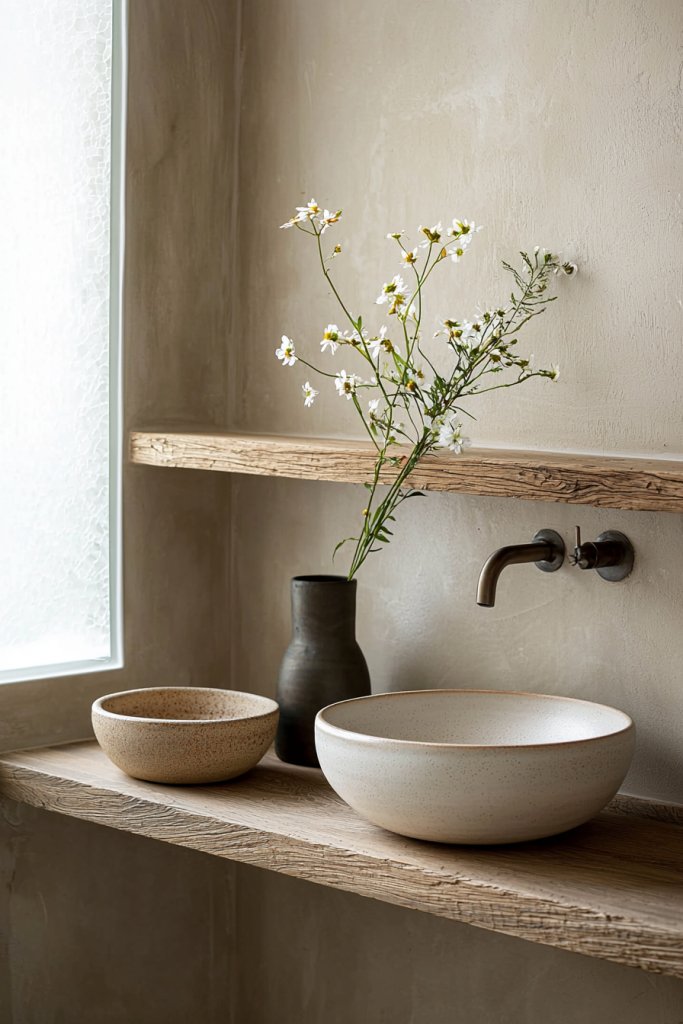
Wabi sabi simplicity means choosing fewer, better objects and allowing generous empty space to become part of the overall design. A single ceramic vase, one meaningful artwork, and an uncluttered vanity surface create a bathroom that feels considered and calm.
Edit your bathroom accessories down ruthlessly and keep only the items that serve a real purpose or carry genuine beauty. Store everything else out of sight so the surfaces you do curate can deliver their full visual and emotional impact.
24. Patina and Aging Add Beauty

Aged brass taps, a worn timber shelf edge, and a slightly mottled mirror frame carry the beautiful marks of time and use. Wabi sabi celebrates this natural aging process, treating patina as a decorative quality rather than a flaw to fix.
Resist the urge to replace fixtures simply because they show age, and instead let the patina develop as part of the story. Polish aged brass lightly rather than restoring it fully so it retains the warm, lived-in quality that defines this aesthetic.
25. Relaxation Nook Encourages Rest

A small relaxation nook in the bathroom corner, with a low stool, a folded linen throw, and a candle, creates a private retreat within your home. This intentional corner invites you to slow down, breathe, and treat bathing as a genuine ritual rather than a task.
Choose a low wooden stool or a natural rattan seat and keep the surface beside it clear except for one or two calming objects. A single plant, a smooth stone, and a beeswax candle are all you need to complete this simple, restorative corner.
Start with one or two of these ideas and let your wabi sabi bathroom evolve gradually over time. The most beautiful spaces grow slowly, with intention, patience, and a genuine appreciation for natural imperfection.